
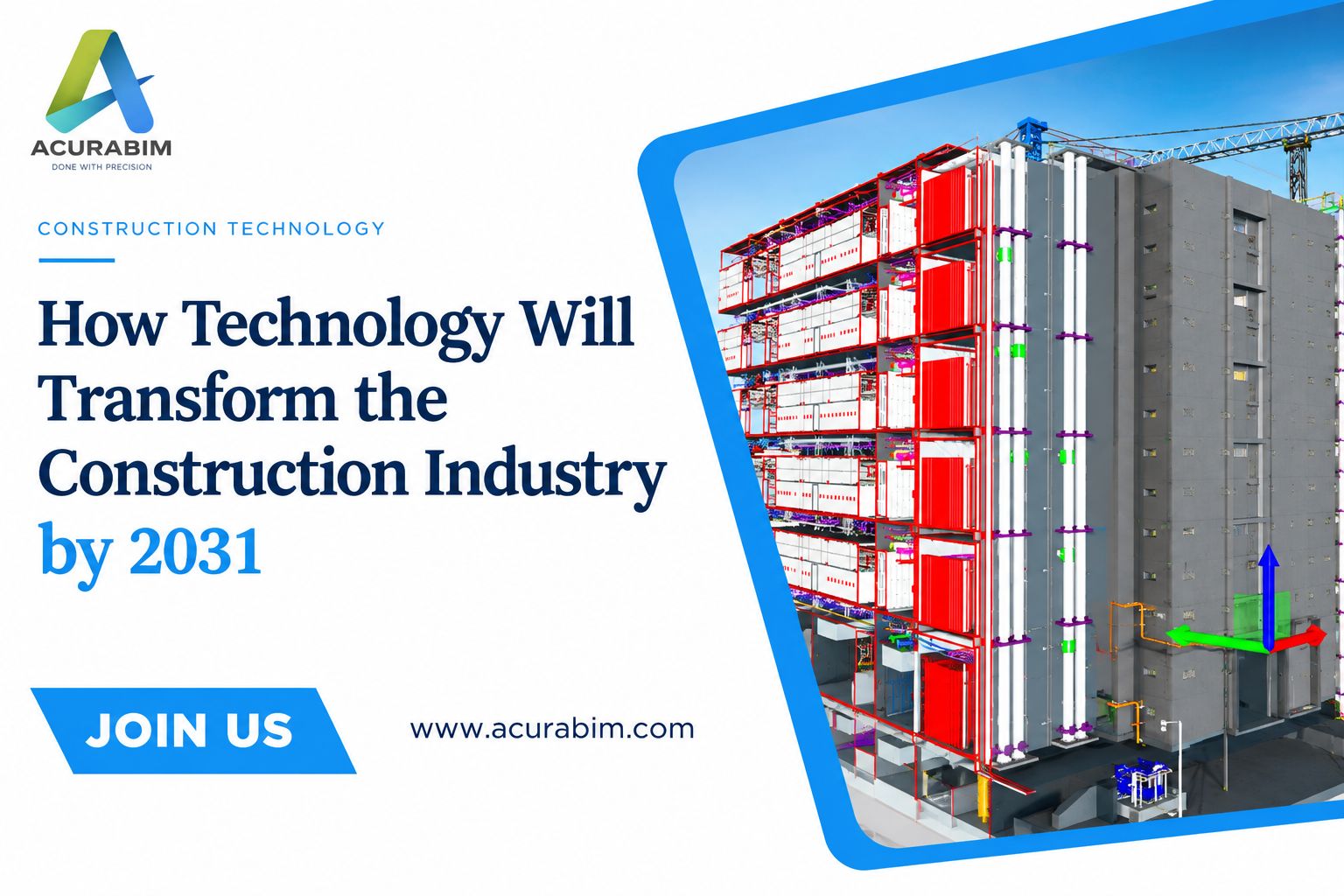
From AI-powered design and BIM automation to digital twins and smart construction sites, technology is set to reshape how buildings are designed, engineered, constructed, and managed.
The construction industry is entering a new era of digital transformation. Traditionally, construction projects have relied on manual processes, conventional drawings, fragmented communication, and on-site problem-solving. While these methods have supported the industry for decades, increasing project complexity, rising costs, tight deadlines, and growing sustainability requirements are pushing construction companies to adopt smarter technologies.
Over the next four to five years, technologies such as Artificial Intelligence (AI), Building Information Modeling (BIM), digital twins, robotics, cloud collaboration, and automated construction workflows are expected to play an increasingly important role in project delivery.
By 2031, companies that successfully integrate these technologies into their operations could gain a significant competitive advantage through improved productivity, better coordination, reduced rework, and more informed decision-making.
Let’s explore the major technologies that will shape the future of the construction industry.
1. Artificial Intelligence Will Transform Construction Workflows
Artificial Intelligence is becoming an important tool across the architecture, engineering, and construction (AEC) industry. AI-powered applications can assist professionals with repetitive tasks, analyze large volumes of project information, and support faster decision-making.
In the coming years, AI is expected to become increasingly integrated into design, engineering, estimation, project management, and construction operations.
Key applications of AI in construction include:
- Automated design assistance: Generating and evaluating multiple design alternatives based on project requirements.
- Intelligent drawing analysis: Identifying inconsistencies, missing information, and potential coordination issues in project documentation.
- Automated quantity take-offs: Supporting material estimation and quantity extraction from drawings and BIM models.
- Predictive project management: Analyzing project data to identify potential schedule delays, cost overruns, and resource constraints.
- AI-powered documentation: Assisting with RFIs, meeting summaries, specifications, and project reports.
AI will not replace engineering expertise. Instead, it will help architects, engineers, and project managers reduce repetitive work and focus more on technical decisions, design quality, and project outcomes.
2. BIM Will Evolve Beyond 3D Modeling
Building Information Modeling has already transformed the way construction projects are planned and coordinated. BIM enables project teams to create intelligent digital representations of buildings and infrastructure before construction begins.
However, the future of BIM extends far beyond 3D visualization.
Over the next five years, BIM workflows are likely to become more connected with AI, project schedules, cost data, fabrication systems, and real-time construction information.
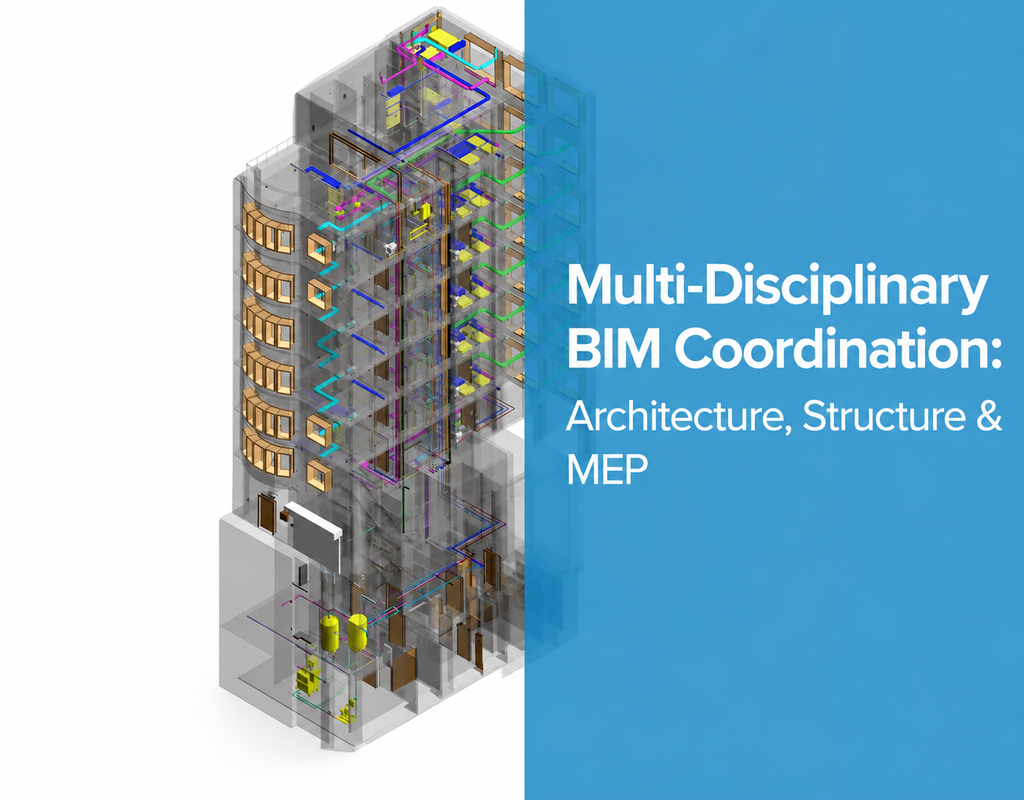
Emerging BIM applications will include:
- Automated model validation and quality checks.
- Intelligent clash detection and coordination.
- 4D BIM for construction sequencing and scheduling.
- 5D BIM for cost estimation and quantity management.
- Automated generation of selected drawings and documentation.
- Integration with fabrication and prefabrication workflows.
- Improved collaboration between architecture, structure, and MEP disciplines.
For BIM and VDC service providers, this creates an opportunity to move beyond traditional modeling services and deliver greater value through coordination, constructability analysis, engineering automation, and data-driven project support.
The future of BIM will be defined not just by the accuracy of the model, but by how effectively project teams use its information to improve construction outcomes.
3. Digital Twins Will Connect Buildings with Real-Time Data
A digital twin is a digital representation of a physical building, facility, or infrastructure asset that can be connected to real-world information.
When integrated with sensors, building management systems, equipment data, and operational platforms, digital twins can help owners understand how a facility performs throughout its lifecycle.
In the construction and building management sectors, digital twins can support:
- Monitoring building systems and equipment performance.
- Comparing planned and actual project progress.
- Identifying operational inefficiencies.
- Supporting predictive maintenance.
- Tracking asset information and maintenance history.
- Improving energy management and facility operations.
For example, a hospital equipped with connected building systems could use digital twin technology to monitor HVAC performance, equipment conditions, and energy consumption.
Similarly, a data center operator could use connected facility information to better understand cooling performance, electrical systems, and maintenance requirements.
As digital construction data becomes more accessible, demand for accurate BIM models and structured asset information is likely to grow.
4. Robotics, Drones, and Automation Will Improve Site Productivity
Construction sites involve complex activities that require significant coordination, measurement, inspection, and manual labour. Robotics and automation can help improve productivity and support safer working conditions in selected applications.
Over the next four to five years, construction companies are likely to expand their use of technologies such as:
Drones for surveying and monitoring: Drones can capture aerial images, support site surveys, and document construction progress.
Computer vision for site inspections: Image-based systems can help compare site conditions with project plans and identify selected safety or quality issues.
Robotic layout systems: Automated equipment can assist with transferring digital design information to physical construction locations.
Autonomous and semi-autonomous equipment: Selected machinery and robotic systems can support repetitive tasks, material movement, and specialized construction activities.
Automated progress tracking: Site photographs and digital records can be analyzed to help project teams understand construction progress.
Adoption will depend on project size, costs, site conditions, safety requirements, and the availability of skilled operators. Nevertheless, the combination of automation and digital project information will create new opportunities for construction companies to improve efficiency.
5. Prefabrication and Modular Construction Will Gain Importance
Prefabrication and modular construction involve manufacturing building components or assemblies in a factory before transporting them to the construction site for installation.
These approaches can reduce on-site work, improve quality control, and support more predictable project schedules when properly planned.
Technology plays a critical role in making these methods successful.
BIM models can be used to coordinate components, generate fabrication information, validate dimensions, and identify potential conflicts before manufacturing begins.
Areas where prefabrication is particularly valuable include:
- Mechanical, electrical, and plumbing (MEP) assemblies.
- Prefabricated pipe racks and service modules.
- Structural steel components.
- Modular healthcare and commercial facilities.
- Industrial buildings and manufacturing facilities.
- Data centers with complex electrical and cooling infrastructure.
As construction companies seek greater predictability and reduced rework, demand for fabrication-ready BIM models, coordinated shop drawings, and constructability reviews may increase.
This shift will also strengthen the connection between digital engineering teams, manufacturers, contractors, and on-site installation teams.
6. Cloud Collaboration Will Improve Project Coordination
Large construction projects often involve multiple stakeholders, including architects, structural engineers, MEP consultants, general contractors, specialist subcontractors, and facility owners.
When these teams work with outdated drawings, disconnected systems, or inconsistent project information, errors and delays can occur.
Cloud-based collaboration platforms help centralize project information and make it easier for authorized stakeholders to access current models, drawings, documents, and issue records.
Future construction workflows will increasingly emphasize:
- Centralized project information management.
- Real-time model and drawing coordination.
- Digital issue tracking and resolution.
- Better management of RFIs and design changes.
- Mobile access to construction documentation.
- Integration between design, procurement, construction, and operations.
Combined with AI-powered search and document analysis, cloud collaboration can also help teams locate relevant project information faster.
The result is a more connected project environment in which decisions can be made using consistent, accessible information.
7. Smart Buildings and Sustainable Construction Will Become More Important
Sustainability is becoming an important consideration in building design, construction, and operation. At the same time, owners increasingly need buildings that use resources efficiently and provide reliable long-term performance.
Technology can support these objectives from the early design stage through building operation.
Important developments include:
- Energy-efficient building design and analysis.
- Intelligent HVAC and lighting controls.
- Monitoring of energy and water consumption.
- Material optimization and waste reduction.
- Carbon assessment across selected building lifecycle stages.
- Predictive maintenance of building systems.
- Digital tracking of building assets and equipment.
BIM can support sustainability by helping teams evaluate design alternatives, coordinate building systems, and organize material information.
When BIM is connected with building management systems and operational data, it can also help facility teams understand how a building performs after handover.
The future of sustainable construction will depend on combining good engineering practices with accurate data, efficient materials, and intelligent building operations.
8. Construction Project Management Will Become More Data-Driven
Project delays, budget overruns, material shortages, and resource constraints remain significant challenges for construction businesses.
Traditional project reporting often depends on periodic updates and information collected from multiple sources. Digital platforms can make this information more accessible and useful for decision-making.
Over the next few years, construction project management systems are likely to make greater use of:
- Automated progress reports and dashboards.
- AI-assisted schedule and risk analysis.
- Digital tracking of labour, materials, and equipment.
- Integrated project cost and quantity information.
- Automated alerts for overdue tasks and unresolved issues.
- Data-driven resource planning and forecasting.
For example, a project dashboard could combine schedule information, open coordination issues, procurement status, and site progress records to help project managers identify emerging risks.
These systems will not eliminate uncertainty from construction projects. Their value will depend on the quality of the underlying data and how effectively project teams act on the information.
9. How These Technologies Will Affect BIM/VDC Service Providers
The changing construction landscape presents significant opportunities for BIM and Virtual Design and Construction (VDC) companies.
As clients adopt more advanced digital workflows, they may increasingly seek service providers that can support the full project delivery process rather than provide modeling alone.
Traditional services such as 3D modeling, clash detection, and shop drawing production will remain important. However, these services can be strengthened by integrating automation, better data management, and advanced coordination processes.
Potential growth areas include:
AI-assisted BIM modeling and quality assurance: Automating repetitive modeling tasks and checking models against defined project standards.
Advanced MEP coordination: Improving coordination of complex mechanical, electrical, plumbing, and fire protection systems.
Digital fabrication support: Providing coordinated models and fabrication-ready deliverables for prefabrication and installation.
4D BIM and construction planning: Linking model components with schedules to support construction sequencing and progress reviews.
Digital twin preparation: Delivering structured BIM models and asset information for building operations.
BIM automation and integration: Connecting authoring tools, project platforms, and business systems through APIs and custom software.
For firms serving international markets, including the United States and the Middle East, developing these capabilities can help create a stronger service offering for contractors, engineering consultants, developers, and facility owners.
The key is to demonstrate measurable value through better coordination, fewer avoidable errors, improved turnaround times, and reliable project information.
10. What Construction Companies Should Do to Prepare for 2031
Technology adoption does not require every construction company to invest in every emerging solution at once. A practical strategy is to identify operational challenges and introduce technologies that address them directly.
Construction companies can prepare for the next phase of digital transformation by following these steps:
1. Review existing workflows. Identify repetitive activities, communication gaps, recurring errors, and processes that create delays.
2. Invest in digital skills. Train employees in BIM, automation, data analysis, AI-assisted workflows, and collaborative project platforms where relevant.
3. Start with focused automation. Test one or two high-volume tasks, such as model validation, document classification, or automated reporting.
4. Improve project data quality. Establish consistent naming conventions, modeling standards, documentation practices, and information management procedures.
5. Measure business results. Track engineering hours, rework, issue resolution time, delivery accuracy, and project costs before and after implementation.
6. Build technology partnerships. Collaborate with software developers, BIM specialists, engineering consultants, and construction technology providers to implement solutions that fit actual project requirements.
7. Scale successful initiatives. Expand technologies that demonstrate clear operational or financial benefits rather than adopting tools simply because they are new.
Companies that combine technology investment with sound processes, skilled teams, and effective project management will be better positioned to adapt to industry changes.
Conclusion: The Future of Construction Is Connected, Intelligent, and Data-Driven
Over the next four to five years, technology is expected to change how construction projects are designed, coordinated, executed, and maintained.
Artificial Intelligence will assist with analysis and repetitive work. BIM will continue to evolve into a connected source of project information. Digital twins will link digital models with real-world performance. Robotics and drones will support selected construction activities, while prefabrication, cloud collaboration, and smart building systems will improve coordination and operational efficiency.
However, successful transformation will require more than adopting new software. Construction companies must invest in people, reliable data, integrated workflows, and processes that deliver measurable results.
For BIM/VDC service providers, engineering consultants, contractors, and developers, the opportunity is to move beyond traditional project delivery and embrace a more integrated approach to construction technology.
The companies that prepare today will be better positioned to deliver smarter, more efficient, and more sustainable construction projects tomorrow.
The future of construction is not just about building faster. It is about making better decisions, reducing avoidable waste, improving collaboration, and delivering greater value throughout a building’s lifecycle.
Frequently Asked Questions (FAQs)
1. How will Artificial Intelligence (AI) impact construction workflows over the next few years?
AI will act as a force multiplier for architecture, engineering, and construction (AEC) professionals by handling repetitive tasks, conducting automated quantity take-offs, identifying drawing inconsistencies, and powering predictive project management to spot schedule delays and cost overruns early.
2. What role do Digital Twins play in modern building management?
Digital twins bridge physical structures and real-time data by integrating sensors, equipment feeds, and operational systems. They allow owners and operators to monitor building performance, track maintenance histories, optimize energy use, and perform predictive maintenance throughout the asset’s lifecycle.
3. How is Building Information Modeling (BIM) evolving beyond basic 3D modeling?
Beyond 3D visualization, BIM is expanding into automated quality checks, intelligent clash detection, 4D BIM for construction sequencing, 5D BIM for cost estimation, and seamless integration with prefabrication workflows and fabrication-ready shop drawings.
4. Why are prefabrication and modular construction becoming essential?
By manufacturing building components (such as MEP assemblies, structural steel, and service modules) in controlled factory environments, construction teams can minimize on-site labour, enhance quality control, reduce rework, and achieve much more predictable project timelines.
5. What practical steps can construction companies take to prepare for 2031?
Companies can successfully transition by reviewing current workflows, training employees in digital tools and data analysis, starting with focused automation projects (e.g., model validation), standardizing data management, and building strategic technology partnerships.