In the modern AEC industry, the complexity of medical facilities demands a level of precision that traditional 2D drafting simply cannot provide. BIM for Hospital Infrastructure Projects has emerged as the definitive solution for managing the intricate web of MEPF (Mechanical, Electrical, Plumbing, and Firefighting) systems required in life-saving environments. At Acura BIM, we specialize in transforming architectural visions into intelligent 3D models that ensure every square inch of a healthcare facility is optimized for patient care and operational efficiency.
When designing high-stakes areas, utilizing BIM for Operation Theater (OT) and ICU Rooms is no longer a luxury it is a necessity for clash detection and spatial coordination. By integrating Architectural, Structural, and MEPF services into a single platform, we provide a “virtual prototype” that allows stakeholders to visualize the project long before the first brick is laid.
The Strategic Importance of BIM for Hospital Infrastructure Projects
Hospital projects are unique due to their dense infrastructure and the critical nature of their utility systems. Unlike standard commercial buildings, hospitals require 100% uptime for oxygen lines, specialized HVAC for infection control, and redundant power systems.
1. High-Precision MEP Coordination
Healthcare facilities house some of the most complex MEP systems in the world. Our team uses Revit and Navisworks to perform rigorous Clash Detection, ensuring that medical gas pipes do not interfere with structural beams or electrical conduits. This “pre-construction” validation reduces on-site rework, which can save up to 20% on the total life cycle cost of the building.
2. Enhanced Visualization and Data Acquisition
Through our BIM Drafting Services, we offer better visualization of floor plans, elevations, and sectional views. This clarity is vital for hospital administrators who need to understand patient flow and staff accessibility. We strictly adhere to COBie, Parameter, and Nomenclature standards to ensure that the data we provide is ready for facility management.
3. Accurate Quantity Take-offs
Budget overruns are a major risk in large-scale healthcare developments. Acura BIM provides detailed BIM Quantity Take-offs from the Revit model. By calculating precise material requirements from rebar to specialized medical fixtures we help clients manage costs effectively.
Specialized Focus: BIM for Operation Theater (OT) and ICU Rooms
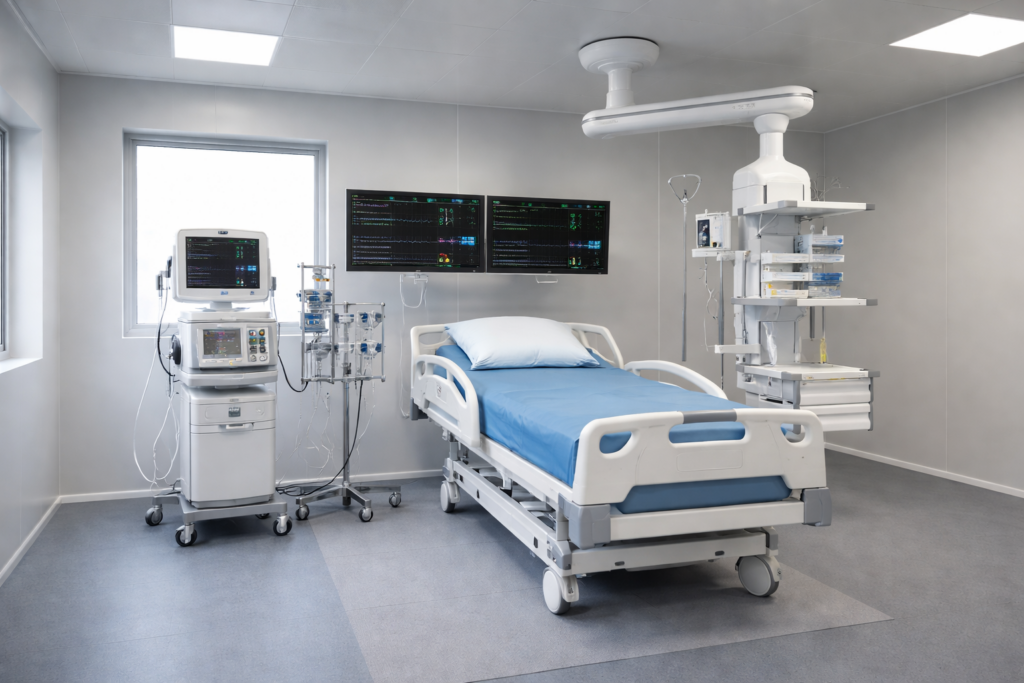
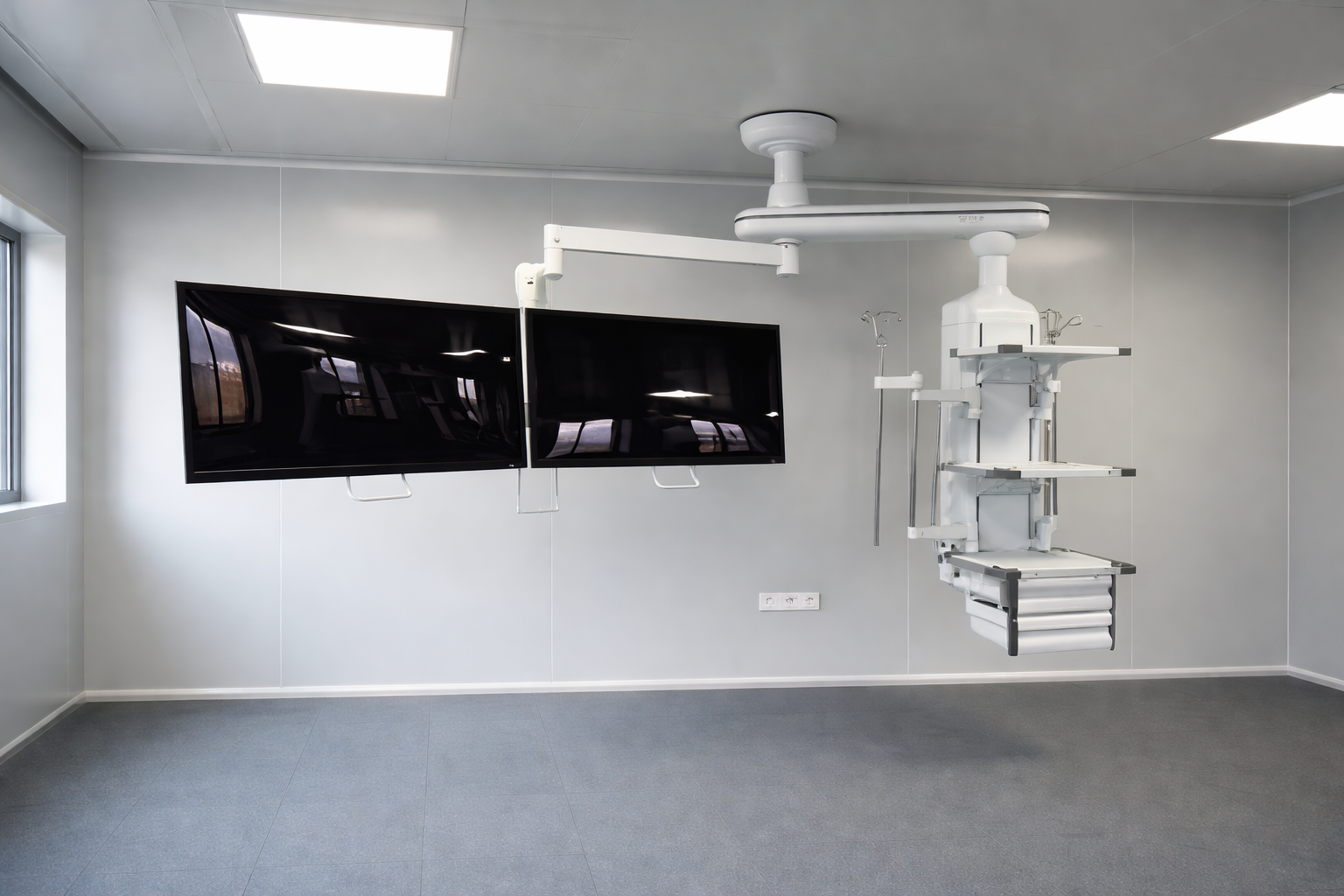
The Operation Theater and Intensive Care Unit are the heart of any hospital. These rooms require “micro-precision” in design to accommodate heavy ceiling-mounted equipment, booms, and advanced lighting.
Optimized Spatial Planning for OT
Using BIM for Operation Theater (OT) and ICU Rooms allows for the simulation of equipment movement. We create Revit Family Creation for specific medical objects, ensuring that surgical lights and pendants have the necessary structural support and clearance. This prevents the “space conflict” often found in traditional designs where medical equipment hits HVAC ducts.
ICU Resilience via 3D Modeling
In an ICU, every second counts. Our 3D modeling services ensure that life-support systems are placed with ergonomic precision. By utilizing Point Cloud to BIM for renovation projects, we can accurately capture the existing conditions of an older ICU and plan a modern, luxury upgrade without disrupting the surrounding hospital wings.
Technical Advantages of Choosing Acura BIM
Acura BIM acts as the “Communication Bridge” between designers, fabricators, and on-site contractors. Our expertise extends across the entire project lifecycle:
- Structural Excellence: We provide 99.9% accurate Structural Steel Detailing and Rebar Detailing, following IS and BS codes to ensure the hospital’s skeleton is earthquake-resistant and robust.
- 4D Simulation: We link architectural and MEP models with construction schedules to create 4D Simulation videos, showing the accurate path of construction activities and identifying potential delays.
- 5D Cost Estimating: We extract quantities for 5D models, allowing clients to logistically understand the expenses required at every stage of the hospital’s development.
- Scan to BIM: For hospital expansions, our point cloud services provide a set of data points that act as a 3D scan of the existing structure, allowing for seamless integration of new wings.
Driving Efficiency with Digital Transformation
The transition from Paper to CAD Conversion to a full BIM environment reduces data loss by nearly 99.9%. In a sector where losing a single schematic for a backup generator could be catastrophic, having a permanent, editable digital record is invaluable. Our team follows a strict process of understanding requirements, developing drafts, and conducting multi-stage design reviews to ensure error-free delivery.
Expert BIM Solutions for Your Next Project
Are you planning a new hospital or upgrading an existing medical facility? Don’t let design errors lead to costly delays or compromised patient safety. At Acura BIM, we bring professional experience and cutting-edge technology to your doorstep. From 2D Drafting to “n-D” Virtual Prototyping, our team ensures your infrastructure is future-ready.
Contact Acura BIM Today to get a customized quote for your hospital infrastructure project.
Frequently Asked Questions
Q1: How does BIM specifically reduce hospital construction costs?
BIM reduces costs primarily through Clash Detection, which identifies errors in the virtual model before they become expensive mistakes on-site. Additionally, precise quantity take-offs prevent material wastage and optimize resource allocation.
Q2: Can Acura BIM assist in the renovation of old hospital wings?
Yes. We use Point Cloud to BIM services to scan existing structures and create precise 3D models. This is ideal for renovating OTs or ICU rooms where existing conditions must be respected.
Q3: What software does Acura BIM use for healthcare projects?
Our team is proficient in industry-leading tools including AutoCAD, Revit, Navisworks, Tekla, and Synchro Pro.
Q4: Does BIM help with government sanctioning and approvals?
Absolutely. Our precise 3D models and detailed shop drawings are designed to meet zoning codes and regulations, which facilitates smoother and faster approvals from government authorities.
Q5: What is the difference between 4D and 5D BIM in hospital planning?
4D BIM adds the element of time (scheduling) to the 3D model to visualize the construction sequence. 5D BIM integrates cost data, allowing for real-time budget tracking as the design evolves.