Building documentation has evolved far beyond traditional blueprints and hand-drawn plans. Advances in modern technology are transforming how the architecture, engineering, and construction (AEC) industry documents, manages, and delivers projects. Digital tools such as Building Information Modeling (BIM) and 3D scanning are now industry standards for architectural and engineering work. The widespread adoption of these technologies highlights a clear shift toward more precise, efficient, and collaborative approaches to construction documentation.
The Evolution of Building Documentation
Building documentation has long been a critical component of successful construction projects. In the past, this process relied on blueprints and hand-drawn paper records which, while functional, were often susceptible to errors and misinterpretation. With the advancement of digital technology, the industry transitioned to Computer-Aided Design (CAD) and PDF-based plans, significantly improving accuracy, consistency, and accessibility. However, these tools still presented limitations, particularly when addressing complex project requirements.
Today, the next generation of building documentation is defined by technologies such as 3D laser scanning, Building Information Modeling (BIM), and other advanced digital solutions. These innovations deliver greater precision and efficiency while enabling new approaches to project design, coordination, and long-term facility management.
Emerging Trends in Building Documentation
Here’s a look at the emerging technology trends in building documentation:
1. Building Information Modeling (BIM)
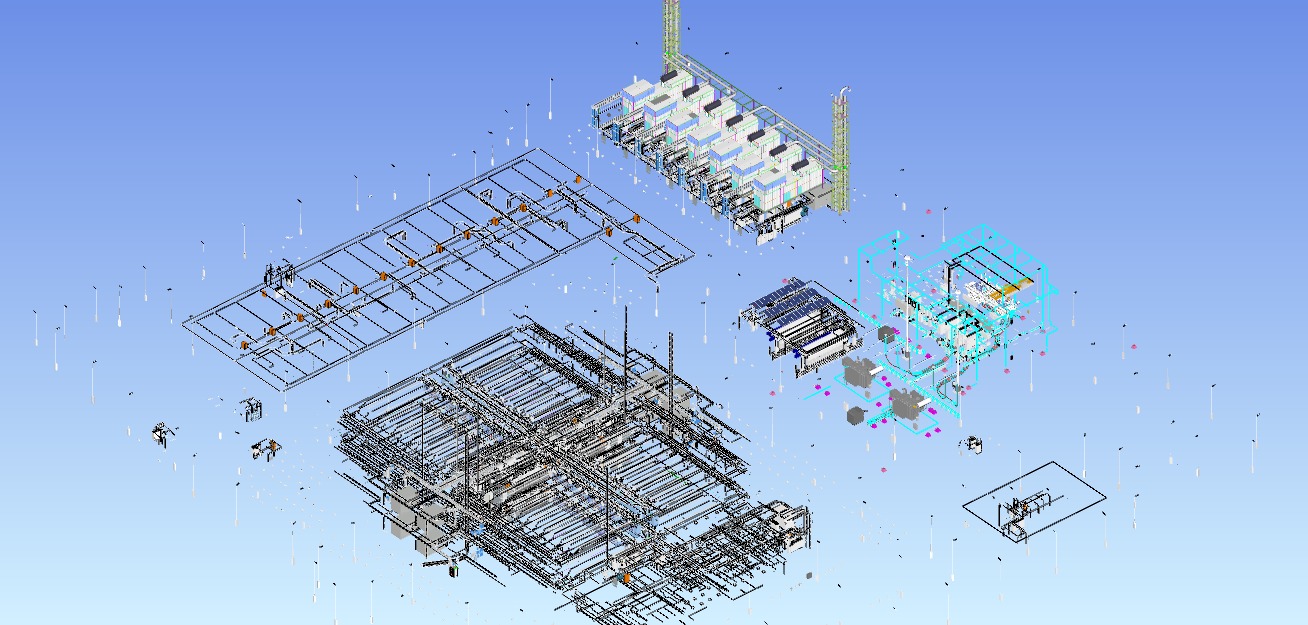
One of the most influential developments in building documentation is the widespread adoption of Building Information Modeling (BIM). BIM provides a comprehensive digital representation of a building’s physical and functional characteristics, enabling a more integrated approach to design, construction, and facility management. Unlike traditional 2D drawings, BIM delivers a detailed 3D model that captures every building component, from structural systems to mechanical, electrical, and plumbing elements.
At Acurabim, we utilize BIM to produce precise, data-rich as-built models that support informed planning and execution. These models give project stakeholders a complete view of the building, enhancing collaboration, improving coordination, and enabling smarter decision-making throughout the entire project lifecycle.
2. Cloud-Based Documentation Solutions
The move toward cloud-based solutions has been another major advancement in building documentation. Cloud technology allows real-time access to project information, making it easier for teams to collaborate, share data, and stay aligned with the latest updates. This is especially valuable on large, complex projects involving multiple stakeholders, as it ensures everyone is working from a single, accurate, and up-to-date source of information.
At Acurabim, we use secure cloud-based platforms to store and manage our clients’ documentation, giving them reliable access to project data anytime, from anywhere.
3. 3D Laser Scanning
Laser scanning has become a vital tool in today’s construction industry, offering unparalleled accuracy and reliability. At Acurabim, we use 3D laser scanning for architectural and engineering projects to capture detailed point clouds that serve as the foundation for highly accurate as-built models. This technology is especially valuable for renovation and retrofit projects, where a precise understanding of existing conditions is essential.
By providing a true-to-life digital representation of a building, laser scanning minimizes the risk of errors, improves coordination, and ensures that design decisions are based on dependable, validated data.
4. Digital Twins
A digital twin is a virtual representation of a physical building that is continuously updated with real-time data from sensors and other connected systems. This technology is gaining traction as a powerful tool for managing and maintaining buildings throughout their entire lifecycle. By combining live data with BIM models, digital twins deliver actionable insights into building performance, supporting proactive maintenance, improved efficiency, and informed decision-making.
At Acurabim, we are excited about the transformative potential of digital twins in building management. Using technologies such as Siemens Building X Lifecycle Twin, Matterport, and TruView, we create dynamic digital replicas that enable our clients to monitor, analyze, and optimize their facilities in ways that were once unimaginable.
