
Why BIM Matters for Data Centers
Data centers operate under strict reliability, cooling, electrical and security constraints. BIM helps stakeholders manage this complexity by providing:
-
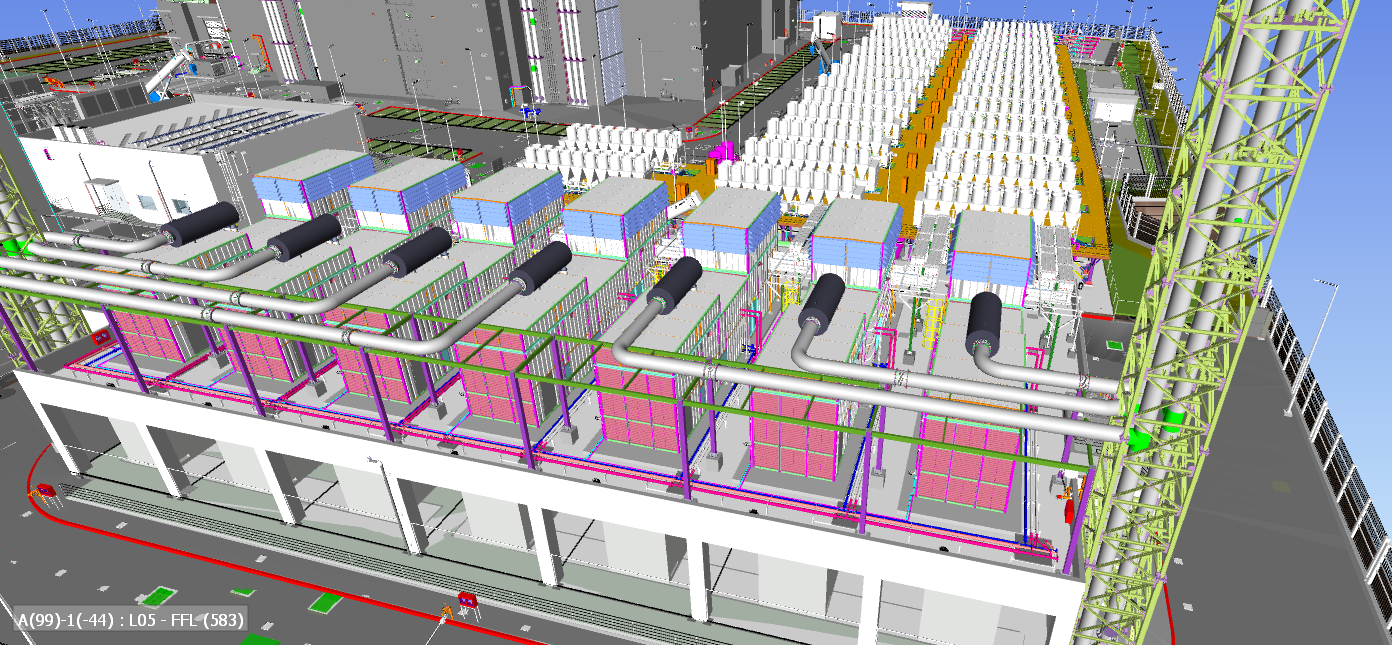
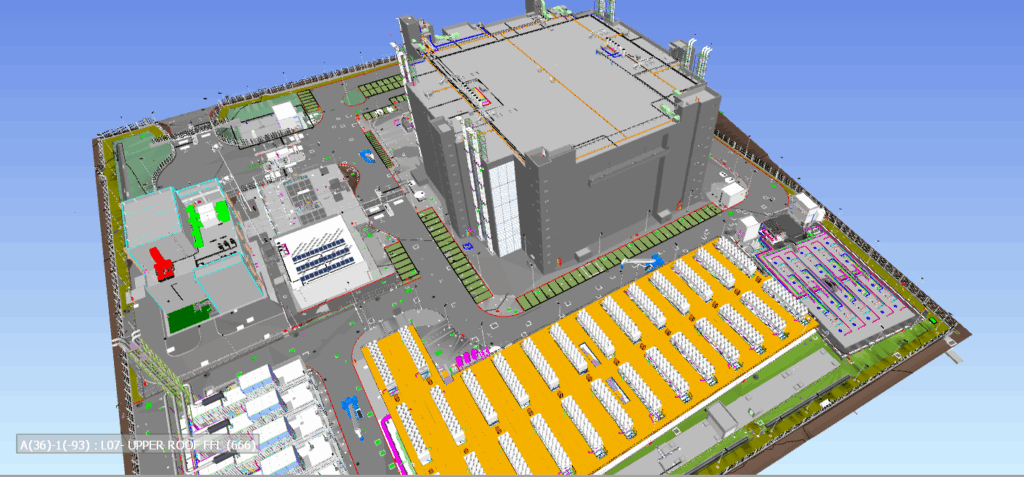
A centralized 3D digital model
-
Asset-level data intelligence
-
Real-time coordination between MEP, architectural, and IT systems
-
Predictive insights through simulations and digital twins
These capabilities make BIM highly valuable during commissioning and facility management, where accuracy and uptime are critical.
BIM in Data Center Commissioning
Commissioning ensures that all building systems perform as intended before going live. BIM improves the entire commissioning workflow in several ways:
1. Improved MEP Coordination Before Handover
Data centers have dense MEP systems — HVAC, cooling lines, electrical conduits, UPS, fire suppression, and server racks.
With BIM:
-
Clash detection identifies conflicts before installation
-
MEP coordination becomes smoother
-
Rework and delays are drastically reduced
This directly accelerates commissioning.
2. Accurate Asset Data for Testing & Validation
Every equipment asset (UPS, CRAC units, PDUs, chillers, fire suppression) is linked with:
-
Manufacturer details
-
Serial numbers
-
Maintenance schedules
-
Warranty periods
-
Model-specific performance data
Commissioning teams use this structured data to validate system performance and ensure compliance.
3. Simulation & Performance Testing
BIM supports simulation tools to test:
-
Airflow and cooling efficiency
-
Power redundancy (N+1, 2N)
-
Rack heat load behavior
-
Fault responses
These simulations ensure the facility is ready for real-world performance before commissioning is complete.
4. Faster Handover with Digital Documentation
Traditional handover packages contain thousands of paper documents.
BIM converts everything into a digital, searchable, cloud-based package:
-
As-built models
-
Equipment manuals
-
Testing & commissioning reports
-
Wiring diagrams
-
Safety procedures
This reduces handover time and improves operational readiness.
BIM in Data Center Facility Management
Data centers operate 24/7 — downtime is extremely costly. BIM helps facility managers maintain uptime and optimize performance.
1. Digital Twin for Real-Time Operations
BIM models can be connected with IoT sensors to create a digital twin, allowing FM teams to monitor:
-
Temperature & humidity
-
Energy usage
-
Server rack heat maps
-
Equipment performance trends
-
Predictive maintenance alerts
This leads to proactive rather than reactive facility management.
2. Asset Management & Maintenance Planning
BIM enables FM teams to track:
-
Maintenance schedules
-
Replacement cycles
-
Spare part inventories
-
Equipment history
QR codes or RFID tags can be integrated to identify equipment on-site instantly through the BIM model.
3. Space & Capacity Optimization
With BIM, facility managers can easily:
-
Plan new server rack layouts
-
Analyze power and cooling capacity
-
Optimize white space usage
-
Forecast future IT infrastructure expansion
This helps extend the life of the data center without costly retrofits.
4. Enhanced Emergency Response
In emergency situations (fire, cooling system failure, electrical overload), BIM helps by providing:
-
3D visualization of systems
-
Exact location of valves, switches, sensors
-
Evacuation routes and safety protocols
This reduces response time and minimizes risk.
Key Benefits of BIM for Data Centers
 Reduced commissioning time Lower operational costs Improved energy efficiency Increased uptime and reliability Easier expansion and upgrades Better tracking of equipment lifecycle Stronger regulatory and audit compliance
Conclusion
BIM is reshaping the way data centers are commissioned, handed over, and managed. Its ability to centralize information, improve coordination, and support predictive operations makes it a game-changer for both contractors and facility managers.
As data center demands grow worldwide, BIM adoption will continue to expand — powering smarter, more efficient, and more reliable digital infrastructure.